
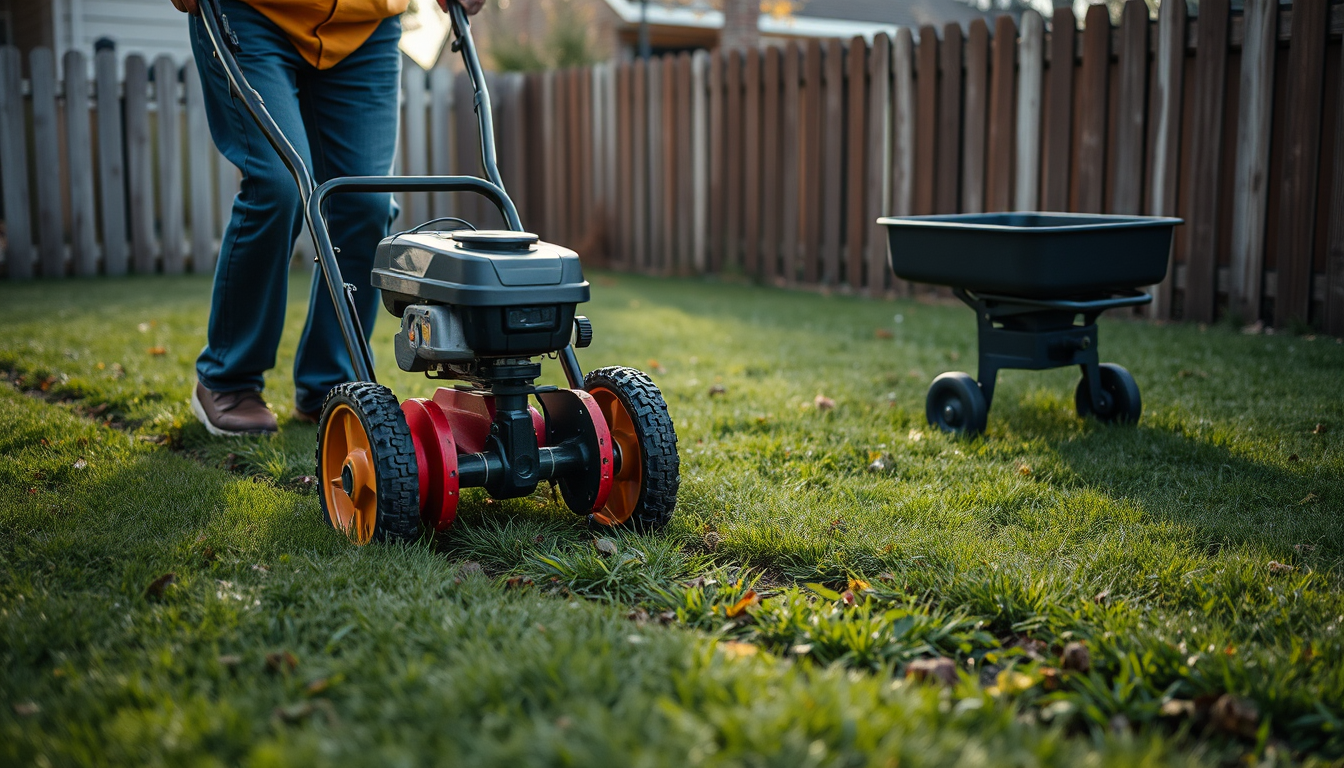
If a Portland-metro lawn could only get one service a year, it should be fall core aeration and overseeding. Almost every common lawn complaint here — thinning, moss, standing water, a spongy feel underfoot — traces back to compacted clay soil, and aeration is the direct fix.
What Aeration Actually Does
A core aerator pulls small plugs of soil out of the lawn, physically relieving compaction so air, water, and nutrients can reach the root zone again instead of running off or sitting on the surface. It's mechanical, not chemical — there's no product that substitutes for actually opening up the soil.
Why Overseed Right After
The holes left by aeration are the best possible seedbed on the property — direct soil contact, less competition, and better moisture retention than seeding onto undisturbed turf. Overseeding immediately after aeration is when new grass has the best odds of actually establishing rather than washing away or drying out on the surface.
Why Fall, Specifically
Early-to-mid fall lines up warm-enough soil for fast germination with cooling air and returning rain, so new seedlings don't have to fight summer drought or heat stress while they establish. Spring aeration works, but new grass then has to survive an entire dry summer as a seedling — a much tougher ask than establishing through a mild, wet fall and winter.
How Often
Most residential lawns benefit from this once a year. Heavily compacted, high-traffic, or newer-construction lawns on disturbed subsoil sometimes see real benefit from doing it twice — once in fall and a lighter pass in spring.