
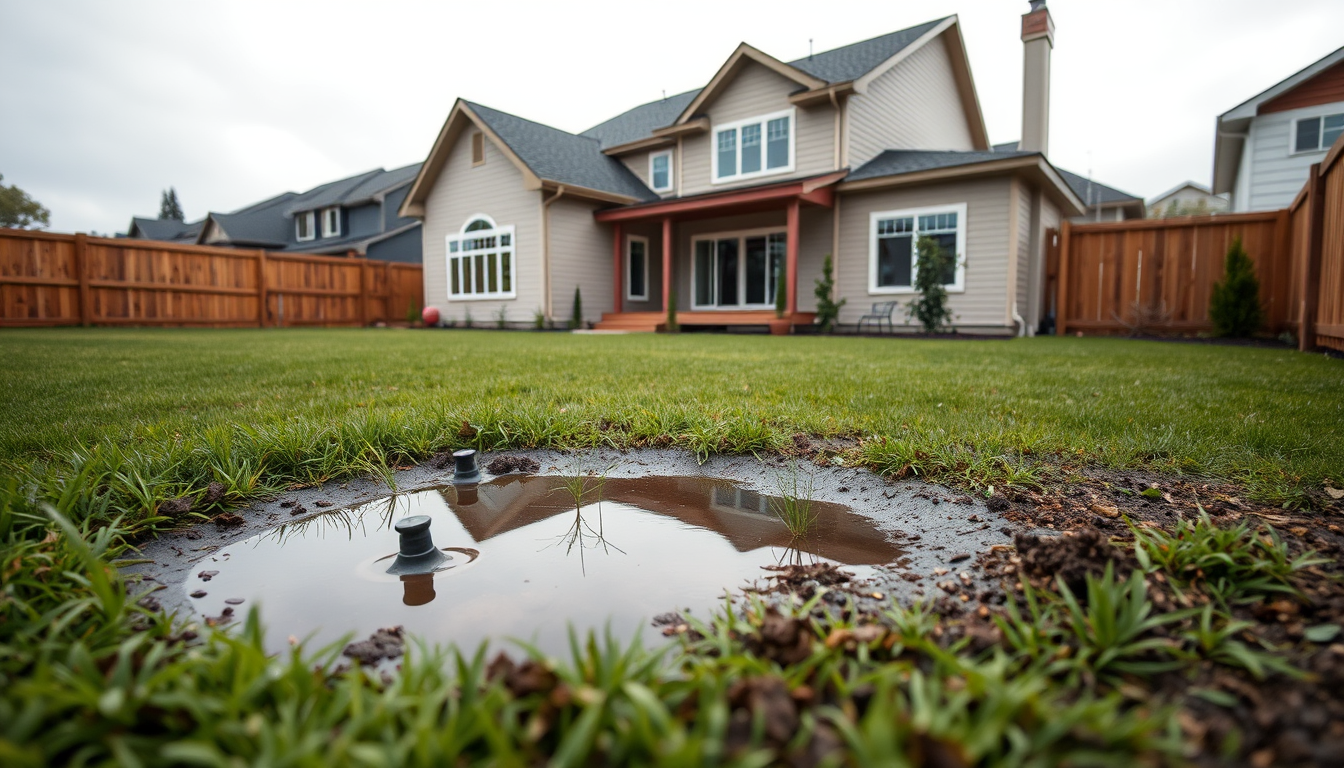
This is a composite, representative example of a job pattern common on newer-construction lots in Hillsboro and similar fast-growing neighborhoods — not a single named client, but a problem and fix we see repeatedly on these properties.
The Starting Point
A newer-build backyard where water pooled for a day or more after any significant rain, and the lawn — installed as sod a few years earlier — had thinned noticeably despite regular mowing and a standard feeding schedule. The likely cause: subsoil compacted by heavy equipment during construction, sitting under a relatively shallow layer of builder-added topsoil.
The Diagnosis
A soil probe confirmed dense, compacted ground just a few inches down — deep enough that a typical fertilizing program couldn't reach it, and exactly the layer standard aeration is designed to break through.
The Fix
Core aeration opened channels through the compacted layer, followed by overseeding to thicken the thinning turf. Because the compaction here came from construction rather than years of foot traffic, a second aeration pass the following spring was recommended to keep opening up the subsoil rather than treating it as a one-time fix.
The Result
Standing water after rain reduced noticeably within one wet season, and the lawn thickened as roots gained access to soil that had effectively been sealed off since before the house was finished.
The Takeaway
Newer-construction lawns aren't automatically healthier than older ones — the ground underneath them is often more compacted than a lawn that's had years of natural freeze-thaw and organic matter to loosen it up. If a young lawn is struggling, compacted subsoil is worth checking before assuming it's a fertility problem.